


nectarglobalThink Simple.
A CIO, a security officer and an architect review a rack plan together in a server room.

Dependable Core · In depth

The detail behind
a dependable ERP ecosystem.

For the CIO, CFO and COO who check the claims: scope and measures for each operating need, the platforms we deliver, country-by-country compliance, the shifts in the ERP market, adoption in detail, the delivery journey and the target architecture.

Operating needs first

Define the operating priorities.

Find where information, processes or controls limit performance. Tie the case to margin, cash conversion, cost to serve and control.

A finance colleague compares ledger sheets while one teammate handles a call and another works at a nearby desk.

Close, reconcile, plan and explain.

Finance process design, ERP delivery and EPM, in one programme.

Scope
Ledger, payables, receivables, assets, cash, treasury, intercompany, consolidation and planning.
Deliverables
Chart of accounts, close calendar, control ownership, integration design, reconciled migration.
Measures
Close duration, open reconciliations, forecast variance, working-capital visibility.

Measures are agreed against your baseline.
Platform capabilities

Explore your platform.

We are product-agnostic. These are the platforms we deliver most, and we recommend whichever suits you best. One team, from the first design decision to everyday operations.

SAP

S/4HANA · ECC

Implement S/4HANA, move from ECC or improve today's estate.

Oracle

E-Business Suite R12 · Fusion

Upgrade EBS or implement Fusion, with a managed transition.

JD Edwards

EnterpriseOne

Finance, distribution, manufacturing and assets: implementation, upgrades and automation.

Odoo

Finance · Operations · Services

Finance, sales, inventory, manufacturing and services on one platform.

Workday

Financials · HCM

Finance and people on one cloud platform, connected to the rest of your estate.

Dependable Core

Your platform. Our delivery.

S/4HANA · ECC

SAP

  • Implementation
  • ECC migration
  • Integration
  • Support

What you receive

01

Readiness & roadmap

A landscape assessment and sequenced S/4HANA plan: processes, code, data, interfaces.

02

Reconciled data & tested workflows

Reconciled migration and end-to-end tests against acceptance criteria.

03

A controlled transition

Rehearsed cutover, rollback, user readiness and stabilisation ownership.

Deliverables, service hours and acceptance criteria are agreed before work begins.

Country by country

One global template.
Every country’s rules.

On a multi-country programme, local requirements are where scope, cost and timelines hide. E-invoicing is only one of them. We scope them country by country from the first weeks, and keep the template standard wherever the law allows.

How we keep it under control

  1. One template, local by exceptionThe global template stays standard. A statutory requirement is the legitimate reason to deviate, so “local needs” cannot quietly justify custom builds.
  2. A country register from discoveryEvery requirement recorded country by country, with an owner, a deadline and how it will be met.
  3. A vendor coverage checkStandard in the platform, a certified add-on, or a build? We find out early, because this is where hidden cost sits.
  4. Waves planned around the rulesRollout order follows statutory deadlines, entity and licence constraints, and consultation timelines, not only technical readiness.
  5. Kept current after go-liveRegulations keep moving, so monitoring and update cycles belong in the run model, with a named owner.

Mandates, thresholds and dates change often. We confirm each country’s current position against official sources before we commit scope or timelines.

What is changing

The ERP market is moving.
Your choices should not be rushed.

Five shifts are reshaping the ecosystem. Each one is a decision for your board, not your vendor.

  1. Keep the core clean

    Keep the ERP standard and move extensions to a platform layer, such as SAP Business AI Platform (BAIP), so upgrades stay affordable.

  2. Suite or best of breed

    Decide deliberately how much to buy from one vendor, then govern the joins between the rest.

  3. Artificial Intelligence inside the process

    Vendors now compete on assistants and agents built into the ERP. Their value depends on clean data, clear permissions and controls.

  4. Configure, do not customise

    Standard content and deployment accelerators replace custom builds, and programmes move faster.

  5. Plan the move on your terms

    Older ERP versions are reaching the end of mainstream support. Vendor dates change, so we confirm the current position for your estate before advising.

Adoption before, at and after go-live

  1. Before go-live

    Ownership and readiness

    • Sponsors agree the why, the scope and the trade-offs before the wider organisation hears
    • Business process and data owners named, and sitting on the design authority
    • Impact assessed role by role: process, system, decision rights, reporting lines
    • Roles, approvals and system access redesigned together
    • Workforce changes planned with HR, respecting works councils and local rules such as nationalisation targets
  2. At go-live

    Ready people, not just a ready system

    • Role-based training on real scenarios, with proficiency checked, not attendance
    • Acceptance testing run by the people who will use the system
    • A readiness gate: everyone trained, every role assigned, everyone knows who to call
    • Super-users, floor-walkers and a help desk through hypercare, with leaders visible
  3. After go-live

    Adoption the board can see

    • Usage, workarounds and shadow spreadsheets tracked, not assumed away
    • Benefits tracked against the business case, each with a named owner
    • Line managers accountable for adoption in their teams
    • Refresher training and continuous improvement, so old habits do not return

Three phases of change

Modernise the enterprise.
Protect business continuity.

Sequenced around your calendar, customer commitments, reporting and capacity for change.

  1. 01

    Set the direction

    Agree what changes group-wide, what stays local and what sets the order.

  2. 02

    Build and validate

    Redesign processes, connect systems, reconcile data. Test flows, controls and migration before release.

  3. 03

    Transition and improve

    Move in controlled waves. Track service, adoption and benefits after launch.

Architecture and operations

Designed for your business.
Built to keep working.

A target architecture is only useful if it can be delivered, run and paid for. We design it together with the people who will build and operate it, and we stay to run it if you want us to.

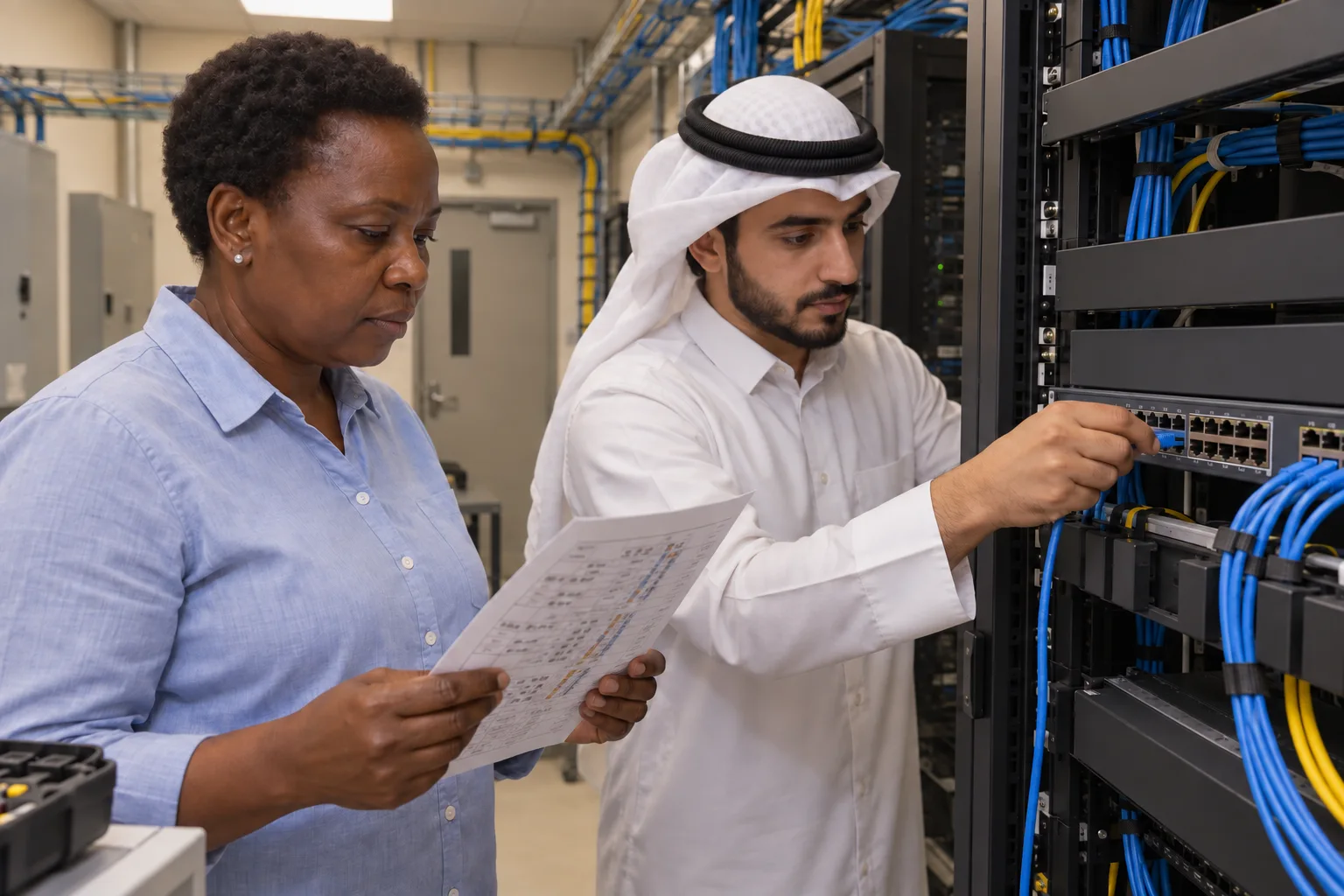
A technician connects a network cable while an architect checks a connection plan.

What we offer

  • Enterprise and solution architecture. A target state for processes, applications, data and controls, tied to your business case.
  • Integration architecture. How the ERP, surrounding systems and external partners exchange data reliably.
  • Platform and vendor selection. A product-agnostic recommendation across SAP, Oracle, JD Edwards, Odoo, Workday and others, based on fit, cost and risk, with any partner relationship disclosed.
  • Transition roadmap. The sequence, coexistence and cutover plan that protects the running business.
  • Cloud, infrastructure and managed operations. Hosting, resilience and support designed alongside the solution, not after it.

You get an agreed blueprint, integration principles, a transition roadmap and clear decisions. We work to your standards: TOGAF, COBIT or your own.

Cloud & infrastructure

Migration, capacity, cost and tested disaster recovery.

Managed operations & support

Monitoring, incidents and releases, with agreed coverage.

The next conversation

Discuss your operating priorities.

Start a conversation