“We have an AI mandate and a deadline. Where do we start?”
Turn the mandate into a sequenced programme backed by evidence, with a fractional Chief AI & Product Officer if you need one.
 nectarglobalThink Simple. Sovereign Artificial Intelligence
Sovereign Artificial Intelligence
Not a promise: proof. We help governments and regulated enterprises, in the Gulf and worldwide, adopt Artificial Intelligence (AI) in which the data, the models and the decisions stay under their control, and can be shown to regulators, boards and citizens.
What leaders ask us
From ministries in the Gulf to banks in Europe and funds in Africa, the questions are remarkably similar. These are the ones we hear most, and how we answer.
“We have an AI mandate and a deadline. Where do we start?”
Turn the mandate into a sequenced programme backed by evidence, with a fractional Chief AI & Product Officer if you need one.
“Our sensitive data can’t leave our control, or the country.”
Each class of data is matched to a hosting tier, with no silent fallback abroad. We deliver in-country.
“We must prove compliance to regulators and auditors.”
We map controls to the standards that apply to you and keep an evidence pack for every release.
“It has to work in our languages.”
Arabic–English and other local languages by design, tested on your own documents and dialects, with Arabic-speaking team members.
“We don’t want to be locked in to one vendor or model.”
Rules stay outside the model, the evaluation set is yours, and the exit is rehearsed.
“Connect AI to our ERP safely.”
Product-agnostic, with deep experience across SAP, Oracle, JD Edwards EnterpriseOne, Workday and Odoo. Agents are read-only by default, with human approval for anything irreversible.
“People must stay accountable for decisions about citizens and customers.”
An autonomy model (advise, prepare, execute) with clear no-go zones and a full audit trail.
“Build our own capability, not dependence on consultants.”
Forward-deployed engineers build alongside your team, then hand over.
Where it pays first
Typical first uses we see in each market. Each starts from a local need, keeps the data where it must stay, and leaves the decision with a person.
Gulf
The need
Residents and businesses expect answers in Arabic and English, at any hour, about licences, permits and applications.
What it does
A bilingual assistant that answers from approved policy and tracks each application, with a named officer approving every decision.
Gulf
The need
Applications, contracts and correspondence arrive as scanned Arabic documents with stamps and handwriting.
What it does
Extraction, classification and summaries in Arabic and English, checked by case officers, with the data kept in-country.
Gulf
The need
Critical infrastructure data cannot leave national control, yet maintenance teams need faster answers.
What it does
Inspection findings, maintenance history and manuals brought together for engineers, on sovereign hosting.
Europe
The need
Banks and insurers must show how every model decision is made, under the EU AI Act, GDPR and DORA.
What it does
Complaints, KYC and claims review assisted by models held in-region, with the evidence pack a regulator expects.
Europe
The need
Caseworkers handle rising volumes in several languages while data stays within national systems.
What it does
Case summaries, drafting and triage for caseworkers, with the decision always left to a person.
Africa
The need
Pension and social-security funds serve members across languages and channels, often on stretched teams.
What it does
Member enquiries, claims checking and contribution queries in local languages, integrated with the fund’s core system.
Africa
The need
Farmer registration, crop intake and payments depend on reliable records, and advice must reach farmers in their language.
What it does
Farmer advisory and intake checks in local languages, working from the grower platform’s own data.
Global
The need
Finance teams spend days matching invoices, explaining spend and chasing exceptions.
What it does
Agents that match, explain and flag inside your ERP, read-only by default, with approvals kept in the platform.
How we engage
Each stage ends with evidence your sponsor can act on, and you can stop, change course or continue at every step.
First 90 days
Readiness assessment, data classification, the first use cases chosen and the business case agreed.
Months 3 to 6
Architecture, hosting tiers and controls agreed; one or two use cases proved on real work against your acceptance criteria.
Months 6 to 12
Proven use cases in production, the operating model and evidence packs in place, and the exit rehearsed.
Year 2
More use cases, on your own platform and team, with our engineers stepping back.
An indicative roadmap. Yours is agreed in the readiness assessment, around your deadlines and priorities.
Start here
Fixed scope, agreed upfront. Contact us for pricing.
Request an assessment ↗What you receive
What sovereign means
Sovereign Artificial Intelligence means your organisation keeps control over where data is processed, who operates the system, which models run and how you can change them. No supplier or foreign jurisdiction holds that control for you. We build that control into the architecture and the ERP ecosystem, then prove it with evidence a board or regulator can inspect.
A local data centre does not help if support tickets, logs or fallbacks quietly send your data abroad.
Few organisations own every layer. What matters is keeping control and choice when it counts.
Today’s open-weight models, including strong Arabic–English ones, are good enough for most enterprise and government work. Invest in the platform, the data and the governance.
Keep permissions and business rules outside the model, keep your evaluation set, and test a model swap before you need it.
Sovereign Artificial Intelligence that cannot safely read from and act on your ERP ecosystem is only a demo.
Why now
We start at home. The UAE and Saudi Arabia are setting the pace, and national AI goals and data rules are arriving elsewhere too. Enterprises that serve governments, and regulated sectors such as finance, energy and health, now need AI that meets those rules by design.
UAE
Saudi Arabia
Europe
Africa and Asia
For your CIO
How we score readiness, the reference architecture, the hosting tiers and the standards we map your controls to. Each part has a tested alternative, so no single supplier decides your future.
Each dimension is scored from 0 (Exposed) to 4 (Verified), today and as a realistic 12-month target. Level 4 is not achievable on every dimension for any single organisation. Chips, for example, are made by a handful of companies.
Tier A · Restricted
For the most sensitive government and commercial data.
Tier B · Confidential
For confidential and internal data that must stay in-country, on the national or sovereign cloud you choose.
Tier C · Public
For public information only, never as a silent fallback for the tiers above.
Models, clouds and tools are examples. We are product-agnostic, and the choice follows your requirements and your regulator.
Who it is for, and who leads it
Ministries, authorities and government-owned entities with national AI goals, citizen services and strict data rules.
Banks, energy, health, telecoms and industrial groups that must keep data in-country or in-region, and show regulators how every model decision is made.
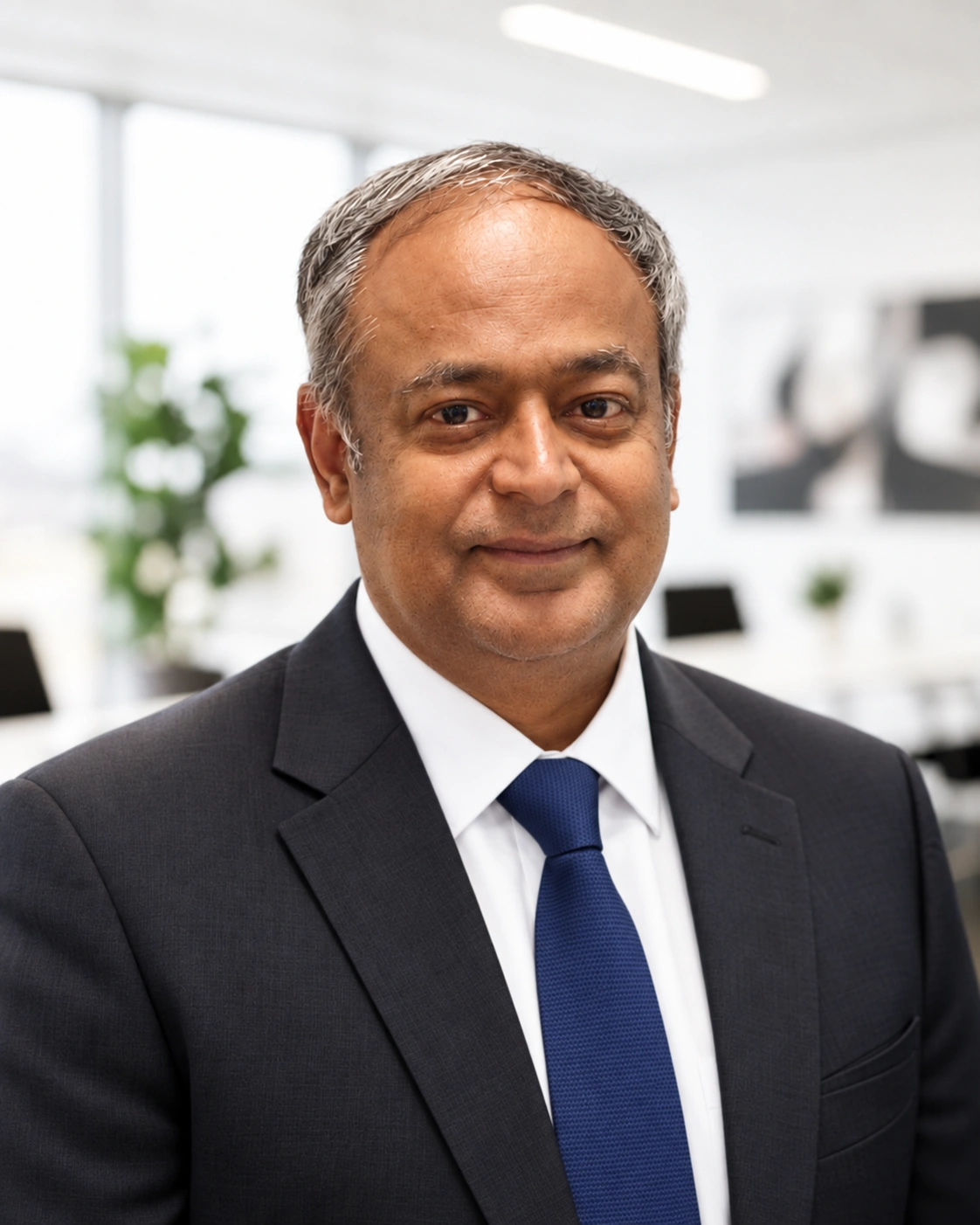 Ravi Shankar RFounder & Managing PartnerLed the Abu Dhabi Farmers Services Centre grower platform: registration, crop intake and payment for 2,000+ farmers on customised JD Edwards.
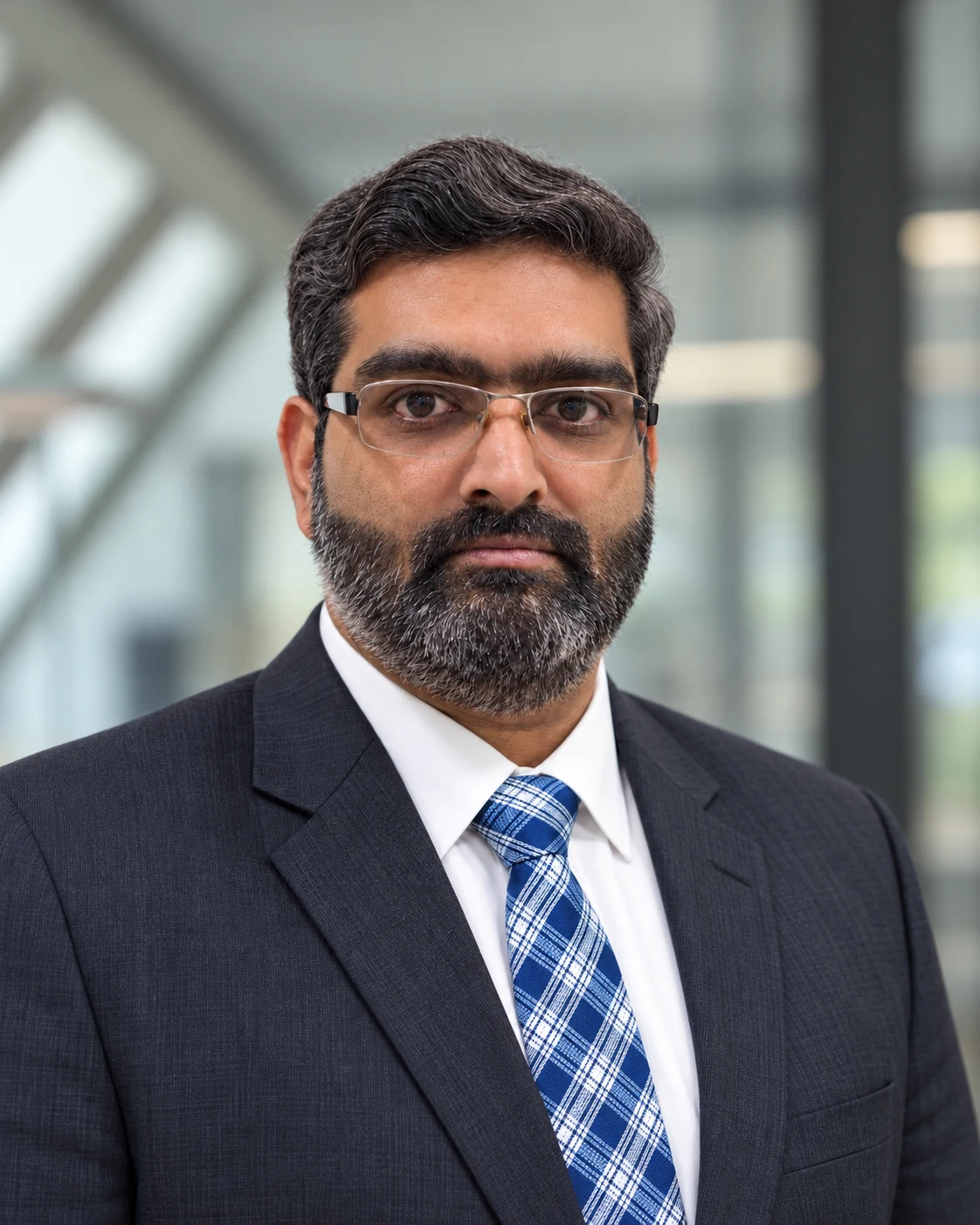 Shankar VisveswaranCo-Founder & Managing PartnerLed British Council’s finance platform across 153 countries: an SAP-certified reference architecture, closing in 4 days.
 Mohammed Yasser AmmarSenior VP — Business Transformation24 years guiding government and retail organisations across the UAE, GCC and Egypt from strategy to working platforms.
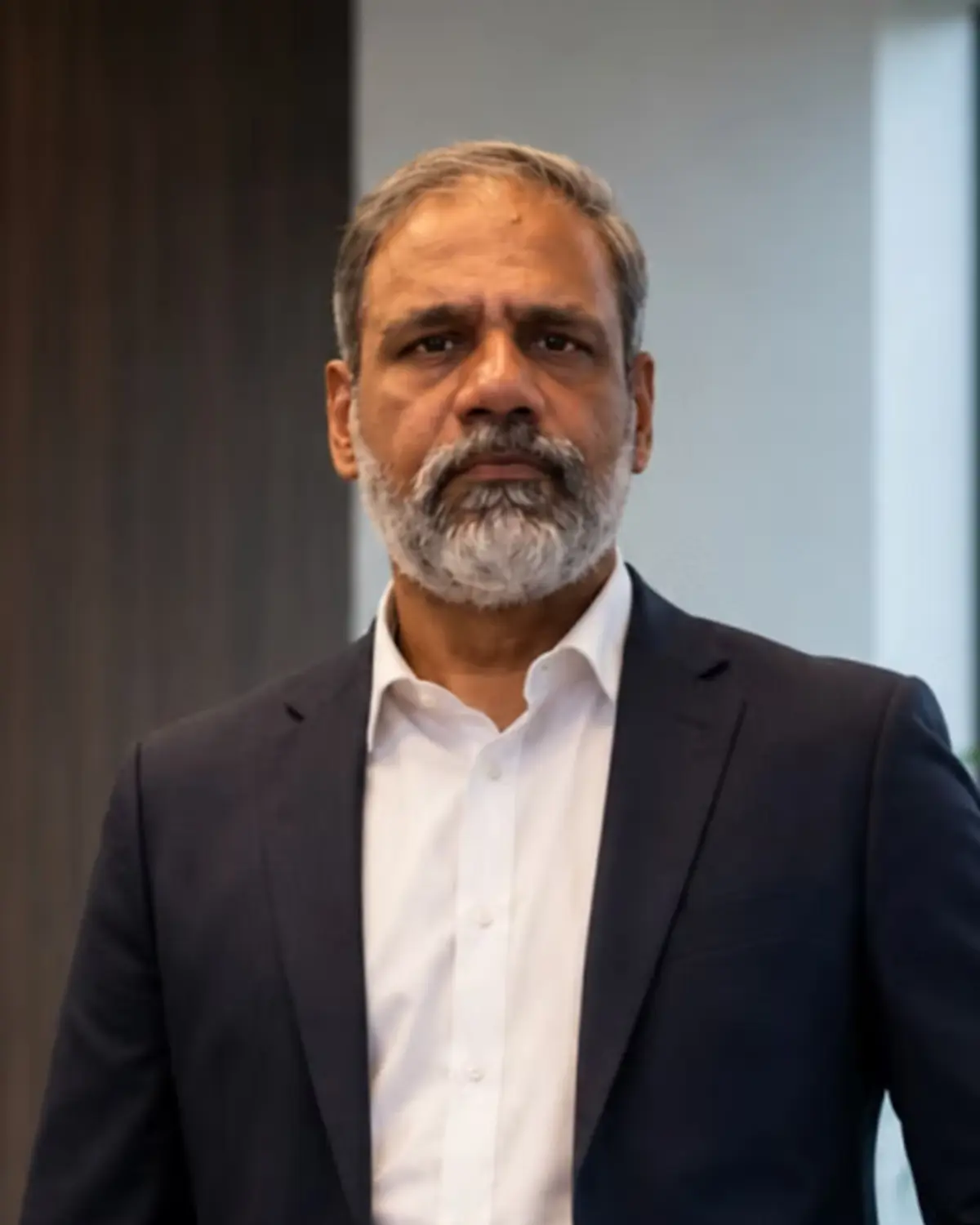 Ganapathy SivakumarHead of AI & ProductAI healthcare innovator: 10+ programmes, including document intelligence and revenue-cycle automation for US healthcare.
We build sovereign AI on the core systems our partners have already been trusted with, including Saudi Aramco’s finance transformation (partner-led) and the Abu Dhabi Farmers Services Centre grower platform, and on Ganapathy Sivakumar’s 10+ AI programmes in regulated healthcare. Before you commit, we prove it on your own work.
Request a sovereign AI readiness assessment ↗Read: Sovereign-ready AI is an architecture decision ↗
The next conversation