

The speed has a source. One person holds the whole business in their head: which customer pays late but always pays, and what was promised to a brother when the second factory opened. So when advisers say "add governance", the founder hears "add delay". We argue the opposite. Professionalising a family group means moving what the founder knows into the business, so that the speed outlives the person.
Where one head stops being enough
The limit arrives at predictable moments: the second generation joins, the group enters a third country, the first outside investor takes a seat. Each brings people who must decide without the founder's memory.
Deloitte Private's 2026 succession study surveyed senior executives at 1,587 family businesses, each with revenue of at least US$100 million. It found that 82% have some form of succession plan, yet only 46% call theirs broad and well developed. The same study expects the share of family businesses appointing a non-family chief executive after succession to double, from 13% to 26%. Outsiders are arriving at the moment the knowledge they need is least written down.
The stakes are national: the UAE Ministry of Economy counts family businesses as 90% of the country's private companies.
Shift one: from the founder's memory to a record the next generation can trust
Most of a founder's operating knowledge has never been entered anywhere. Payment terms were agreed on a phone call, and a pricing exception sits in a salesman's notebook.
The first task is one customer list and one chart of accounts across every entity, with a month-end close that falls on the same day each month and agrees with the bank. A simple test: a granddaughter who joined last year should be able to see margin by entity without telephoning anyone.
A trusted record also keeps the peace. The UAE's family business law, in force since January 2023, lets a family charter set out how shares are valued and how profits are distributed. Those clauses are worth exactly as much as the numbers beneath them, and siblings argue less about dividends when no branch of the family owns the spreadsheet.
Shift two: from loyalty-based roles to named accountability
Family groups fill roles by trust: the cousin who runs purchasing, the accountant of thirty years who signs everything. That loyalty is an asset worth keeping.
What changes is that every outcome gains a name. One person owns cash and another owns each country's result. The same UAE law points this way: its charter may set minimum qualifications for family members who work in the business, and where a board is formed, its chair may not also manage the company.
Named roles often expose a gap that no family member is yet ready to fill. A fractional leader is the bridge. A senior finance or operations leader works inside the business for part of each week, builds the role, coaches the family member who will hold it, and then steps back. The seat stays in the family.
Shift three: from one decision-maker to decision rights that are fast because they are written down
The ERP and the family constitution are the same document in two languages. Both answer one question: who may decide what.
The constitution answers in words, separating the decisions that belong to owners from those that belong to the board and to management. The ERP answers in approval limits and user roles: who may release a payment, change a price or open a credit line. Where the two disagree, the system wins quietly, every working day. Where they agree, nobody has to ask, and a written limit is quicker than a call to the chairman.
Regulators already treat this as something to be written and seen. Saudi Arabia's Companies Law, effective January 2023, allows a family charter covering governance, family employment and dividends to form part of a company's articles of association. In India, SEBI's listing rules require family settlement agreements that affect the management or control of a listed company to be disclosed.
A family council that decides in an afternoon
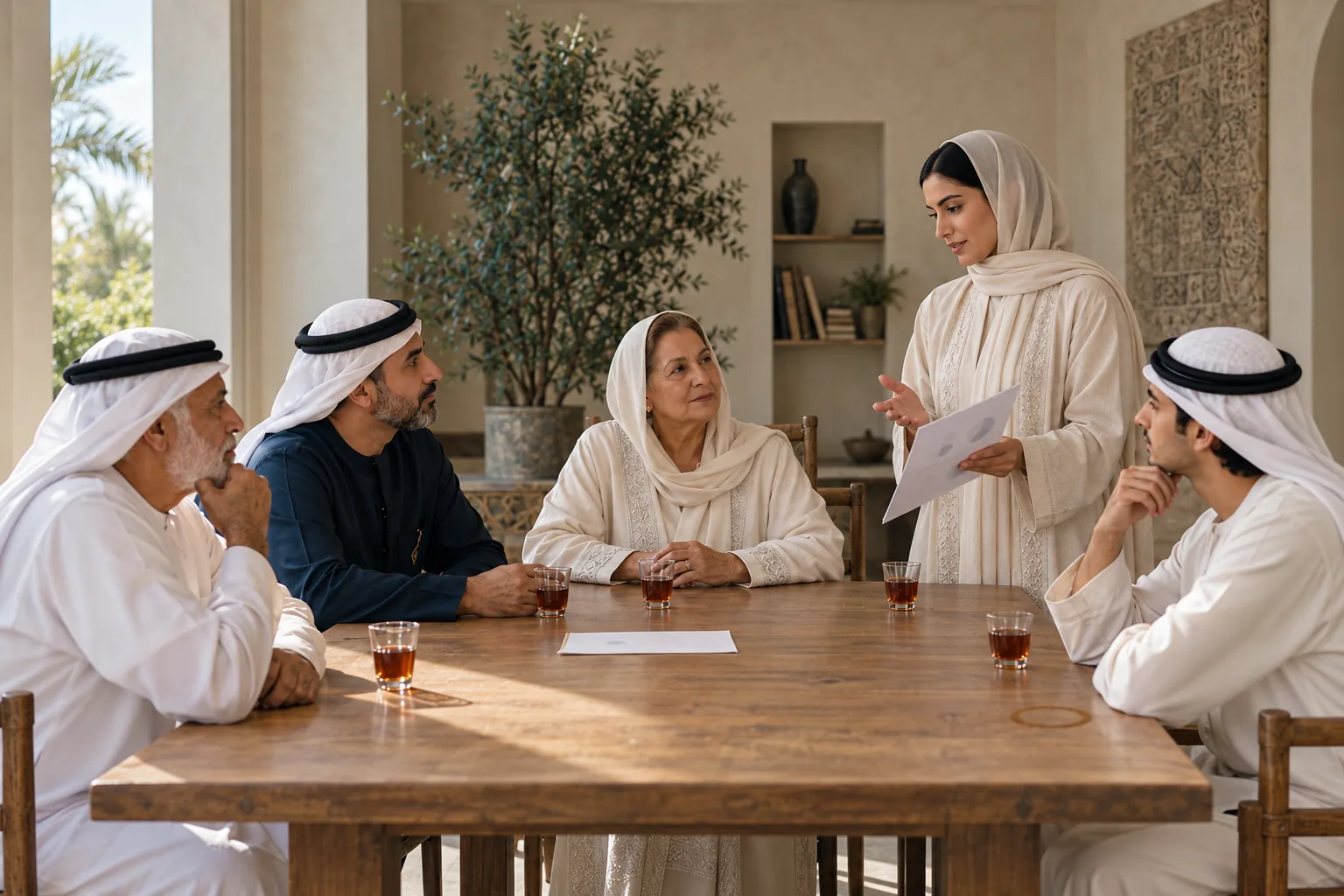
Picture the council of a trading and manufacturing group a few years from now. A third-generation member chairs. The founder sits beside a non-family CFO, and everyone reads the same pack: cash by entity, margin by country, and a page listing the decisions managers took within their limits last quarter.
The proposal is a fourth country. The CFO shows what it does to cash, the charter says an investment of this size belongs to the council, and the vote is taken before the afternoon ends. The founder speaks last, and briefly. The decision is as fast as any the founder made alone, and this time everyone in the room could have explained it.
Twenty decisions, before the next family meeting
This quarter, list twenty decisions the founder took personally last month. Against each, write who else could have taken it and up to what limit, then check whether the approval settings in your finance system say the same.
If that list shows a role nobody yet holds, a NectarGlobal fractional leader can sit inside the business for one to three days a week and build it alongside the family.