
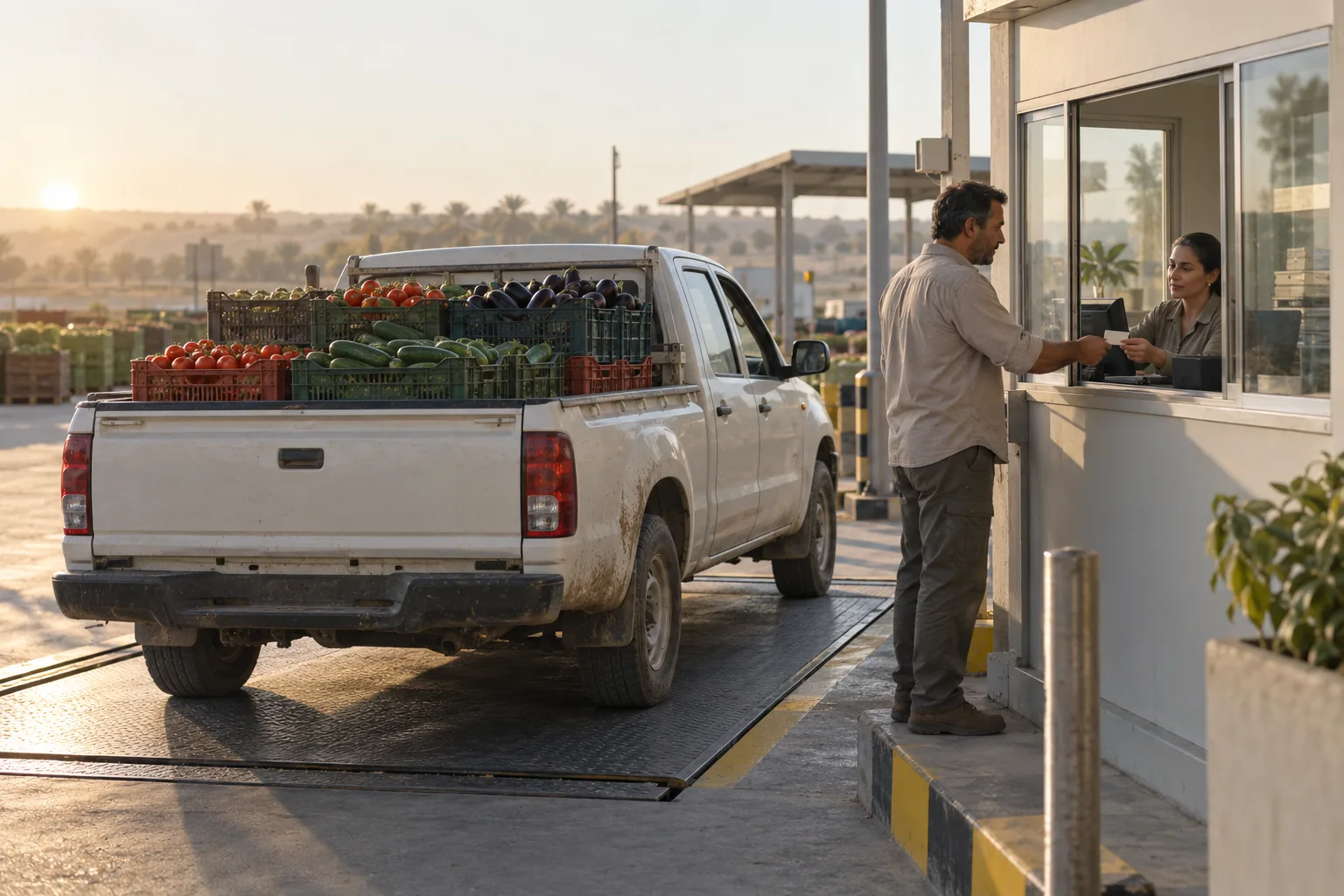
What happens to it next matters more than the weight. If it goes onto a paper slip and the money arrives on some later, unannounced day, the farmer drives home with a doubt. If the ticket carries the grower's name, the crop, the grade and the amount due, and the payment follows from that same ticket, the farmer drives home with a reason to plant again.
The slip and the bank account must agree
We led a grower-management platform in the Gulf that brought more than 2,000 farmers onto one system. Farmer registration, crop intake and payments ran from a customised JD Edwards solution integrated with the weighbridge. The weighbridge was integrated with the platform, so the weight at the plate fed the payment record.
What matters to a farmer at the gate is not the software. It is when the money will arrive, and whether the slip in hand matches the amount in the account.
FAO research published in April 2021 found that five of every six farms in the world are smaller than two hectares, and that these farms work around 12% of agricultural land yet produce roughly 35% of the world's food. A third of what the world eats arrives in small loads, from people whose deliveries are seldom recorded anywhere a ministry can read.
A country cannot secure what it cannot count
Food security is usually discussed as strategy: reserves, import corridors, vertical farms. It is first a transaction problem. A country cannot secure food it cannot count, and it cannot count produce until every delivery by every grower is registered, weighed, graded and paid through one record.
The UAE's National Food Security Strategy 2051 aims to make the country the world's best in the Global Food Security Index by 2051, through 38 initiatives that include enabling local production with modern technology. Local production is a sum of deliveries. An ambition on that scale is met or missed one truck at a time, and a national dashboard is only as good as the weighbridge it starts from.
Payment is the part leaders underrate. We regard prompt, visible payment as the most effective agricultural policy a system can deliver, because it decides whether a farmer plants again. India's agriculture ministry told parliament in July 2026 that 1,656 mandis across 23 states and four union territories were integrated with e-NAM, the national electronic market, and it listed direct payment of sale proceeds into farmers' bank accounts among the benefits.
The same logic waits in Africa. The African Union's agriculture strategy for 2026 to 2035, launched in May 2025 with the declaration that carries Kampala's name, aims to lift agrifood output by 45% and cut post-harvest losses in half. A loss can only be halved once it has been measured, and the first honest measurement is the difference between what a grower says left the field and what the plate records at intake. For a grain board in East Africa, that is where the target becomes a number someone owns.
Seven o'clock at the ministry
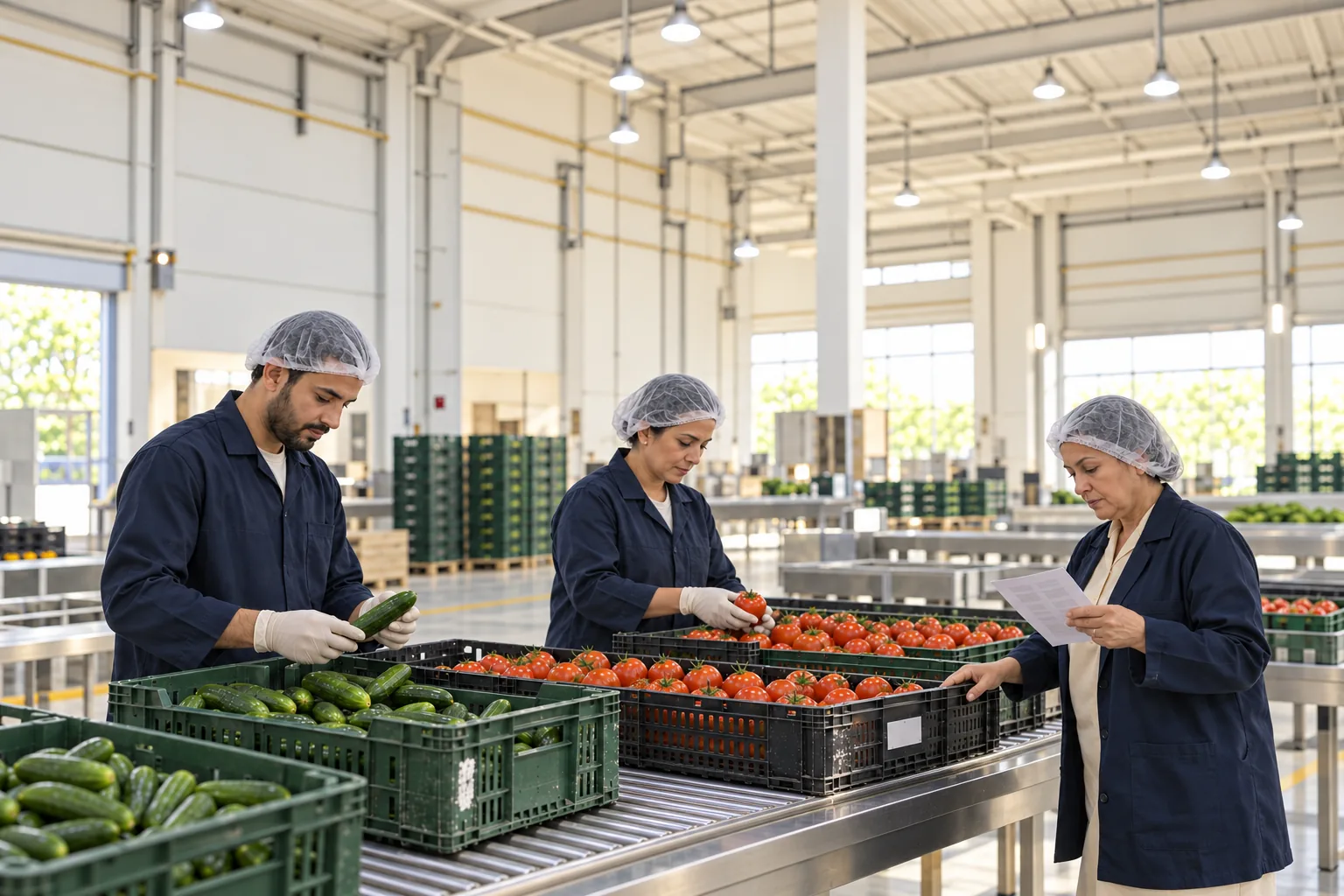
Picture a food-security official a few years from now, at a desk at seven in the morning. One screen shows yesterday's intake by crop and by region, set against the same week last season. Tomato deliveries from one district are well down, and because every ticket belongs to a registered grower, the official can see that the fall comes from a cluster of farms along a single irrigation line.
By nine the district office has been called and next week's import order adjusted. Nothing on that screen is an estimate gathered from wholesale markets. It is a count, available because the weighbridge ticket and the payment are the same record.
What AI will ask of the weighbridge
Yield forecasting needs several seasons of what each grower delivered, by crop and grade. Water allocation needs to know which farms turn a cubic metre into the most food, which matters most where water is scarce, as in the Gulf. Targeted subsidy needs proof of who delivered, so that support follows the produce and not the application form.
A model trained on estimates returns estimates. A model trained on weighed, graded and paid deliveries can tell an official in March which crop will be short in May, while there is still time to act. We expect the countries that forecast their food supply well in the 2030s to be the ones that fixed their intake records in the 2020s.
The point holds for any enterprise that buys from growers. A sugar estate or a dairy that pays from the weighbridge record builds the same asset.
Ten deliveries, followed from plate to payment
This quarter, choose one intake point and follow ten deliveries from the weighbridge to the farmer's bank account. Count how many times the weight is re-entered by hand, and how many days pass before the money arrives.
A transformation diagnostic with NectarGlobal starts at that gate and works outward, to the record a minister or a board can read each morning.